Bike arrived in a carton? What is loose, what is set wrong, and what to fix first
A component-by-component account of what a mail-order upright bike leaves unfinished, what a shop charges to complete it, and what needs retightening in the first months.
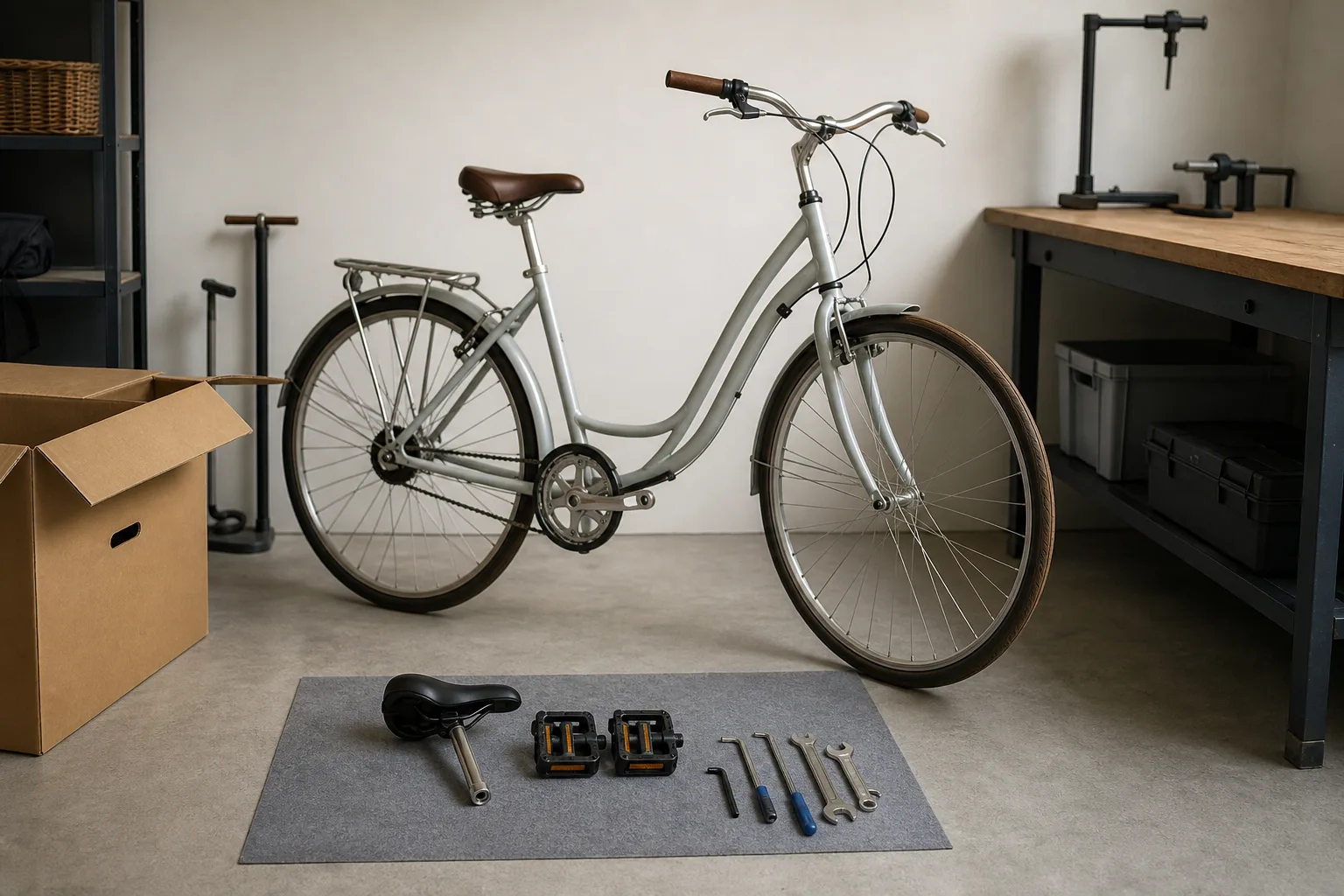
A boxed bicycle and a shop-built bicycle can be the same model, from the same factory, with the same part numbers on every sticker, and still be two different objects by the time either one carries a rider to the grocery store. The difference is roughly two hours of skilled labor, distributed across a dozen small adjustments that nobody photographs for a product page. Knowing which of those adjustments the carton leaves undone is the whole of the decision, and it is a decision most buyers make without ever being told what is at stake.
One. The parts that arrive genuinely loose
On a typical upright comfort bike shipped direct, the front wheel, the handlebar, the seatpost and saddle, the pedals, and often the fenders and front basket hardware arrive detached or held by a few turns of thread. The stem faceplate bolts are commonly finger-tight over a bar that has not been rotated to any particular angle. Pedals are the item most often installed wrong, because the left side is reverse-threaded and a cross-threaded aluminum crank arm is not a repair, it is a replacement. A careful reader counts the loose hardware against the parts diagram before touching a wrench.
Two. The parts that arrive attached but adjusted badly
Rim brake pads are the standard offender: set square to the rim at the factory jig, then shipped, then arriving toed the wrong way or riding half onto the tire sidewall. Cable tension is set slack so the carton closes, which means the lever travels most of its arc before anything happens. Headset bearing preload is frequently left loose enough to knock when the front brake is held and the bike rocked forward. Internally geared hubs and derailleurs both ship with indexing that is close, not correct, and the shift that skips under load is the tell.
Three. What the wheels have not had done to them
Machine-built wheels leave the factory laced and tensioned quickly, not evenly, and the spokes settle during the first fifty miles of riding whether anyone attends to them or not. A careful reader squeezes pairs of spokes around the rim, listening for the dead, soft pair that gives more than its neighbors, and spins the wheel to watch the rim pass a brake pad. Hub cone adjustment on cup-and-cone axles is the other unphotographed item, and side-to-side play at the rim, felt by rocking the tire against the fork, is worth catching before the bearings pit.
Four. What a shop charges to finish the job
Most shops price this as a flat assembly or safety-check fee, quoted per bike rather than per hour, and it usually lands in the same range as a mid-level tune-up on that shop's posted service board. Ask two questions before agreeing: whether the fee includes truing the wheels and setting hub bearing adjustment, and whether a follow-up adjustment within a few weeks is included or billed separately. Some shops decline outside assemblies entirely, or charge a premium for them, because a carton with missing hardware becomes their problem. Call before hauling the box across town.
Five. The first three months of riding
New cable housing compresses and new cables stretch, so brakes and gears that were correct on day one usually need a quarter turn at the barrel adjuster inside the first hundred miles. Spokes settle, chains on single-speed bikes loosen at the rear axle, seatpost clamps creep under a heavier rider, and fender stays back themselves out until someone applies a thread locker. Tires ship soft and lose air steadily. The Consumer Product Safety Commission is responsible for federal bicycle requirements, including the reflectors and other equipment a bike must carry when sold, which is worth confirming is still attached.
Six. What a careful reader checks before the first ride
Work the front brake and push the bike forward, then repeat with the rear, and require that both stop the wheel well before the lever reaches the grip. Lift the front end and drop it an inch, listening for anything that rattles. Check that both quick-release levers, if fitted, close with real resistance and point back along the frame. Confirm the stem bolts and pedal threads against the torque figures printed on the parts themselves. Then ride a slow loop on a quiet street, and stop to retighten whatever announced itself.
The carton is a fair way to buy a bike for flat, short-trip riding, provided the buyer treats assembly as a real task with a real cost, whether that cost is paid in an afternoon with a torque wrench or handed to a shop with a service board on the wall.
- 01
Slack shipping cables
Brake and shift cables are deliberately left loose so the bike fits the box. Lever travel that feels long on day one is usually tension, not a fault.
- 02
Brake pad alignment
Pads often arrive rubbing the tire sidewall or sitting below the braking track. A pad that touches rubber can cut a tire open within a few weeks.
- 03
Headset knock test
Hold the front brake and rock the bike forward; a knock at the fork crown means loose bearing preload. Riding it that way brinells the bearing races.